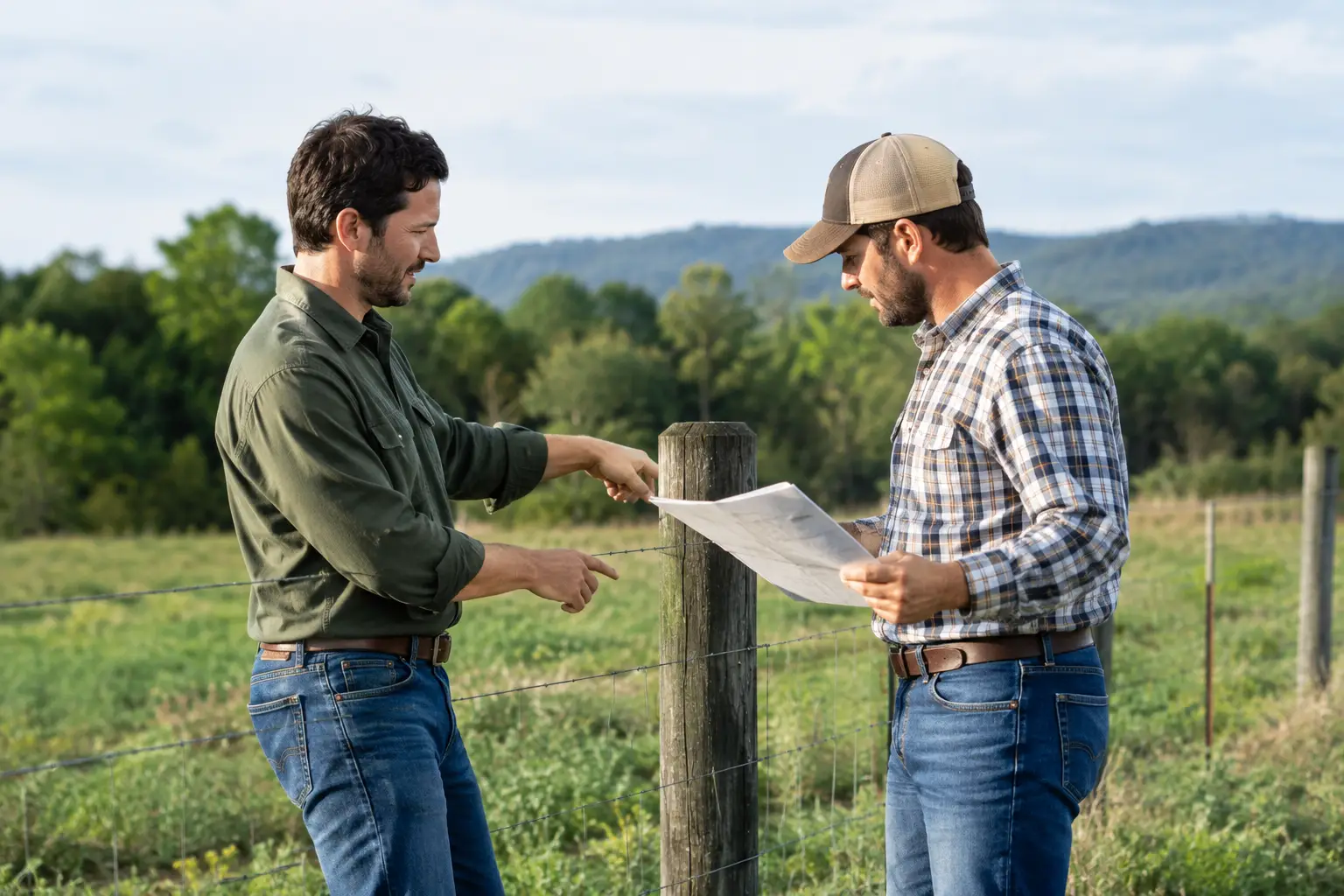
A fence installed a few feet over the line can seem like a small problem until a sale, new construction project, driveway repair, or family transfer brings the issue into focus. To resolve a boundary dispute effectively, start with facts rather than assumptions. A neighbor may have acted in good faith, and an old fence may have stood in the same place for decades, but neither circumstance alone answers where the legal property line belongs.
Boundary disputes can affect far more than a strip of ground. They may interfere with financing, title insurance, a planned addition, access to a road, timber rights, drainage, or the ability to sell property without delay. A calm, informed response can protect both your ownership interests and, when possible, a valuable neighbor relationship.
Start With the Documents, Not the Fence
Physical markers are useful clues, but they are not always legal proof. Fences shift, survey stakes disappear, and prior owners may have made informal arrangements that were never recorded. The first task is to gather the documents that describe and support your ownership.
This often includes your deed, title commitment or title policy, prior surveys, plats, subdivision restrictions, easement documents, and any agreements involving the affected area. Your county records may also contain earlier deeds or filed surveys that help explain how the boundary was created and described.
Pay close attention to the legal description in the deed. A street address or parcel number identifies property for practical purposes, but the legal description is generally what defines the land conveyed. In rural areas of Arkansas and Oklahoma, descriptions can involve section lines, metes and bounds, monuments, or older calls that require careful interpretation.
A review of the title history may reveal more than a simple measurement issue. It can uncover a gap in the chain of title, an overlapping legal description, a recorded easement, or a previous boundary agreement. These issues call for legal analysis, not just a conversation over the fence.
Get a Current Survey From a Licensed Surveyor
If the parties disagree about the line, a current survey is usually one of the most useful next steps. A licensed surveyor reviews the legal description, available plats, prior surveys, physical monuments, and other evidence to locate the boundary on the ground.
Do not rely solely on a county GIS map, online parcel viewer, appraisal map, or informal measurements. These tools can be helpful for general reference, but they commonly state that they are not surveys and should not be used to establish legal boundaries.
A survey may show that the fence is properly located. It may also show that a structure, driveway, landscaping, or portion of a building crosses the line. Sometimes each owner has a survey supporting a different conclusion. When that happens, the discrepancy should be evaluated carefully by the surveyors and, if needed, by counsel familiar with real estate disputes.
The expense of a survey can feel frustrating, especially when the disputed area is small. Yet a reliable survey often costs far less than correcting a title problem during a closing, moving an improvement after construction, or litigating a dispute that could have been addressed earlier.
Discuss the Issue Carefully and in Writing
Once you have credible information, approach your neighbor respectfully. Many boundary conflicts begin with incomplete information, not intentional misconduct. Show the survey or relevant records, explain the concern plainly, and avoid accusations before the facts are established.
It is wise to make a written record of significant communications. That does not mean every discussion needs to be hostile or formal. A brief follow-up message confirming what was discussed, what documents were shared, and whether either party plans to obtain a survey can prevent misunderstandings later.
Do not make verbal promises about land ownership, access, or a permanent fence location without understanding the consequences. An informal statement such as “you can use that corner forever” can create complications if the property is later sold or inherited. If the parties reach a workable solution, it should be documented in a form that protects both sides and can be properly recorded when appropriate.
Options to Resolve a Boundary Dispute Without Court
The right solution depends on the survey results, the title records, the value of the affected land, and the parties’ willingness to cooperate. A negotiated resolution is often preferable because it gives owners more control over cost, timing, and practical terms.
A written boundary line agreement may be appropriate when the parties agree on the true line or agree to settle uncertainty between their properties. Depending on the circumstances, a deed may be needed to convey a small strip of land so that the record ownership matches the agreed use of the property.
Other situations may call for an easement. For example, a neighbor may need continued access over a driveway that crosses the boundary, while the underlying owner wants to preserve ownership and clearly define maintenance responsibilities. An easement can address access, width, use restrictions, repair costs, insurance concerns, and whether the right continues after either property changes hands.
Mediation can also be useful when both owners want an agreement but disagree about the terms. A neutral mediator does not decide who owns the property. Instead, the mediator helps the parties identify an acceptable resolution before legal fees and personal tensions increase.
Any agreement involving real property deserves careful drafting. A poorly worded agreement may create a new title problem, fail to bind future owners, or leave unanswered questions about fences, improvements, maintenance, and access.
When Adverse Possession or Acquiescence May Matter
Longstanding use can change the legal analysis, but it rarely produces a simple answer. Arkansas and Oklahoma have legal doctrines that may affect ownership or boundary rights when someone has openly used land for an extended period under specific circumstances. These claims can involve adverse possession, boundary by acquiescence, prescriptive easements, or related theories.
The requirements are fact-specific and can differ based on the state, the nature of the land, the length and character of possession, tax issues, notice, and other evidence. A fence that has existed for many years may be relevant, but it does not automatically establish ownership. Likewise, permission to use land may defeat a claim based on hostile or adverse possession.
These cases often depend on old photographs, testimony from prior owners, tax records, survey evidence, maintenance history, and the original reason a fence or driveway was placed where it is. Because memories fade and documents disappear, prompt legal review is often the best way to preserve the evidence that matters.
When Court Action Is Necessary
Some disputes cannot be resolved through discussion. A neighbor may refuse to recognize a survey, continue building across the line, block access, remove markers, or claim ownership of land that the records place in your name. In those cases, court action may be necessary to protect your rights.
A quiet title lawsuit can be used to ask a court to determine ownership interests and remove competing claims to title. Other claims may seek a declaration establishing the boundary, an injunction to stop interference or construction, removal of an encroachment, damages, or partition of jointly owned property. The appropriate approach depends on the facts and the remedy you need.
Litigation is not a first choice simply because it can be expensive and time-consuming. Still, delay can also be costly. If a neighbor is pouring a foundation, selling disputed land, or taking actions that may alter the property permanently, early legal advice can help determine whether immediate action is needed.
Avoid Steps That Can Make the Conflict Worse
Property owners understandably want to protect what is theirs, but self-help measures can create additional exposure. Do not move a fence, remove a neighbor’s improvements, block a driveway, cut trees, or confront workers based solely on an assumption about the line. Even if you ultimately prove ownership, those actions can lead to claims for damage or escalate an otherwise manageable disagreement.
Also avoid signing a survey, affidavit, quitclaim deed, boundary agreement, or easement simply to end an uncomfortable conversation. These documents can affect title for years to come. A small concession may be sensible in some cases, but it should be a deliberate decision informed by the value of the land and the practical consequences.
Protect Your Property Before the Problem Grows
A boundary question is rarely just about a fence. It is about clear title, future use, family assets, and the ability to make decisions about your property with confidence. Owners in Northwest Arkansas, the River Valley, and Southeast Oklahoma often benefit from local counsel who can assess the records, coordinate with surveyors, pursue a negotiated solution, and litigate when protection of the property requires it.
Knight, Stockton & Cunningham helps property owners evaluate boundary conflicts with the honesty, integrity, and practical judgment these matters deserve. Before you take action or accept a neighbor’s proposal, seek guidance that helps protect your interests and gives you a clear path forward.