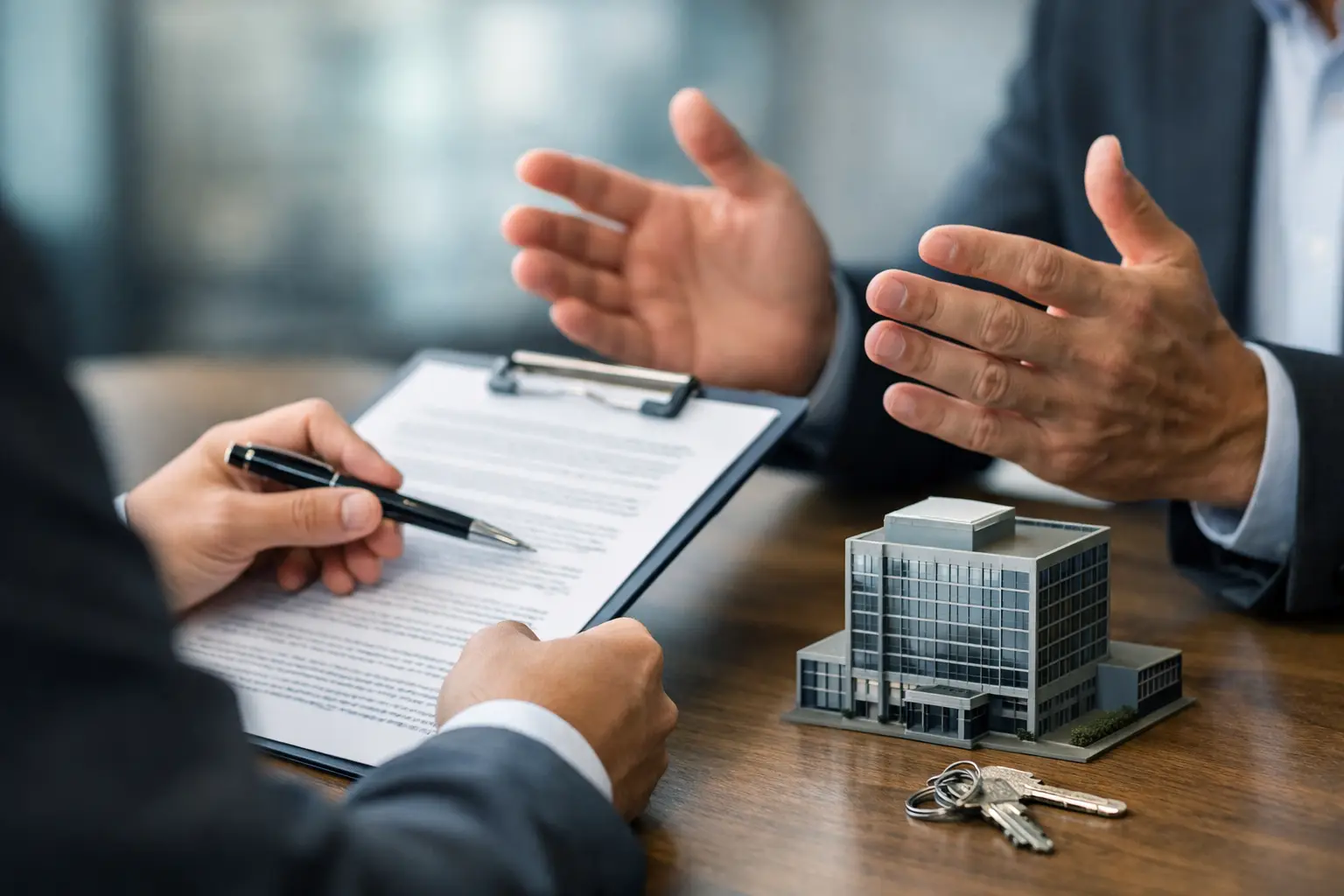
A missed rent payment, a leaking roof, an unexpected common-area charge, or a landlord’s refusal to renew can quickly become more than a business inconvenience. A commercial lease dispute can put a location, inventory, customer relationships, and hard-earned revenue at risk. The right response begins with a careful review of the lease and a clear plan that protects your business without making the conflict worse.
Commercial leases are not one-size-fits-all documents. A restaurant, retail store, professional office, warehouse, and agricultural operation may each have very different obligations under their leases. The language of the agreement, the parties’ conduct, and the facts surrounding the disagreement all matter.
What Causes a Commercial Lease Dispute?
Many disputes start with an assumption. A tenant may believe the landlord is responsible for a repair, while the landlord may point to a provision placing maintenance obligations on the tenant. One party may view a charge as routine, while the other sees it as unauthorized. By the time either side seeks legal help, months of emails, invoices, and frustration may be involved.
Common disputes include unpaid rent or late fees, disputed operating expenses, repair and maintenance responsibilities, property damage, use restrictions, lease renewal terms, security deposits, and alleged lease violations. Conflicts also arise when a landlord sells a building, a tenant wants to assign the lease to a new business owner, or construction nearby interferes with access to the premises.
The central question is rarely just who feels wronged. It is what the lease requires, whether either party has met those obligations, and what remedy is available under the agreement and applicable state law.
Start With the Lease, Not the Argument
When a disagreement develops, find the complete signed lease, along with every amendment, addendum, renewal, guaranty, and written modification. A verbal understanding may be relevant in some circumstances, but commercial leases commonly require changes to be in writing. Relying on an informal conversation can create avoidable risk.
Read the provisions that address the immediate issue, but do not stop there. A repair disagreement, for example, may involve the maintenance clause, notice requirements, insurance obligations, casualty provisions, rent-abatement language, and default remedies. A tenant that simply stops paying rent because repairs have not been made may create a separate default, even if its complaints have merit.
Pay close attention to deadlines. Leases often require written notice and provide a period to cure a claimed violation. Missing the notice method or cure deadline can weaken an otherwise valid position. If the lease says notice must be delivered to a specific address by certified mail, an email alone may not be enough.
Preserve the Evidence That Supports Your Position
Commercial disputes are often decided by documentation rather than memory. Preserve records as soon as a problem becomes apparent. Save the lease documents, rent ledgers, invoices, photographs, inspection reports, text messages, emails, and correspondence with contractors or property managers.
If the condition of the property is at issue, take dated photographs and videos before repairs are made. If a water leak damaged stock or interrupted operations, keep records showing the dates, affected areas, repair requests, lost inventory, and business impact. If charges are disputed, request an itemized accounting and retain proof of prior payments.
It is also wise to keep communications professional. A message written in anger may later be read by a judge, mediator, lender, buyer, or insurer. State the facts, identify the lease provision when possible, request a specific response, and preserve a copy of what was sent.
Do Not Assume You Can Withhold Rent or Change the Locks
Commercial property disputes can produce strong reactions. A tenant may feel justified in withholding rent until a landlord acts. A landlord may be tempted to lock out a tenant after a missed payment. Either step can have serious consequences if it does not comply with the lease and the law.
The proper approach depends on the circumstances. The lease may permit certain actions after notice and an opportunity to cure. It may also limit remedies, require mediation or arbitration, or provide for attorney fees to the prevailing party. State law can affect available remedies as well, particularly when possession of the premises is at stake.
Before taking action that could threaten access to the property, business operations, or the lease itself, obtain legal guidance. A measured response may preserve leverage and create a stronger record for negotiation or litigation.
Look Beyond the Immediate Disagreement
A commercial lease dispute should be evaluated in light of the business goal. Sometimes the best outcome is enforcing the lease and keeping the business in place. In other situations, a negotiated exit, lease assignment, rent adjustment, repair agreement, or early termination may be the more practical solution.
For a tenant, remaining in a location may be critical because of customer traffic, equipment installation, licensing, or the expense of moving. For a landlord, preserving a reliable occupancy arrangement may be more valuable than a prolonged fight that leaves a space vacant. These practical considerations do not replace legal rights, but they often shape a successful resolution.
A clear settlement agreement can be valuable when the parties find common ground. It should address the precise issues being resolved, payment terms if any, repairs, deadlines, releases, confidentiality where appropriate, and what happens if either party does not perform. A vague agreement can simply delay the next dispute.
When Litigation May Be Necessary
Not every conflict can be resolved through discussion. Litigation may be necessary when one party refuses to perform, significant money is at stake, the premises are being wrongfully withheld, or a business faces immediate harm. A lawsuit can seek damages, enforce a lease obligation, clarify the parties’ rights, or address possession of commercial property.
Litigation has trade-offs. It can protect important rights and prevent further losses, but it also requires time, evidence, and expense. The possibility of recovering attorney fees may depend on the lease language and the claims involved. An experienced attorney can help assess the strength of the case, the likely costs, and whether a negotiated resolution remains possible.
Businesses in Northwest Arkansas and Southeast Oklahoma may also encounter issues involving properties, owners, or guarantors across state lines. Those matters deserve particular care. The governing-law clause, property location, and terms of the lease can affect where a claim should be brought and which rules apply.
How Counsel Can Help Protect Your Interests
A commercial lease is often one of a business’s most significant ongoing obligations. Legal counsel can review the agreement, identify notice and default requirements, communicate with the other party, evaluate damages, and pursue a practical resolution. Early involvement can sometimes prevent a manageable disagreement from becoming a costly legal dispute.
At Knight, Stockton & Cunningham, we help property owners and business clients address real estate disputes with the care, honesty, and practical judgment these matters require. Our attorneys understand that a lease conflict is not merely a contract issue. It may affect a family business, a long-planned expansion, or a property investment built over years.
If you are facing a lease dispute, resist the urge to act on assumptions or informal advice. Gather your documents, protect the record, and seek clear counsel before a missed deadline or rushed decision puts more at risk. The best next step is often the one that preserves both your legal rights and your ability to move forward.